Modernizing 311 Service Delivery With AI: Lessons From the City and County of Denver and the City of Revere
Author: Janice Quintana
Janice Quintana is Director of Business Development for Local and State Government at Citibot and a recognized leader in 311 operations and resident service modernization. Over the past six years, she has helped shape Citibot’s local government solutions. Before Citibot, she founded Washington, D.C.’s 311 system and led 311 operations in Charlotte and Atlanta. She is also a founding member of Engage 311 and previously served on the Board of Directors for the Association of Government Contact Center Professionals.
Key Summary
Government websites have become the public service front door, yet many government agencies still manage them with outdated pages, inaccessible PDFs, inconsistent voice, and fragmented ownership. That challenge has become more urgent as the Department of Justice requires state and local governments to meet WCAG 2.1 Level AA standards for web content and mobile apps, with compliance deadlines of April 26, 2027 for entities serving 50,000 or more people and April 26, 2028 for smaller jurisdictions. At the same time, residents increasingly expect fast, mobile-first service and agencies are under pressure to deliver more with fewer staff.
This white paper argues that the next phase of modernization is not just about launching better digital channels. It is about governing the information behind them. Citibot Refresh is built for that challenge, continuously scanning websites and PDFs to identify outdated content, accessibility issues, inconsistent messaging, and accuracy problems, then recommending specific fixes that teams can act on quickly.
Key Conclusions
Government agencies now need to treat website governance as core infrastructure because accessibility, service delivery, and public trust all depend on the quality of digital information.
AI performs best when source content is clean, plainspoken, and current, which is why Denver invested heavily in website cleanup before scaling AI-assisted service.
The strongest return from AI comes when it handles routine, high-volume questions so staff can focus on complex resident needs that require judgment and empathy.
Citibot Refresh offers a practical path for agencies that need to improve compliance, consistency, and trust without relying on months of manual review.
Key Quote
“We want the machines to do the transactional so that our people can do the transformational.”
In plain terms, the quote means AI should handle repetitive requests like hours, service lookups, and basic reporting so public employees can focus on difficult, high-value resident issues that require experience, care, and discretion.
Watch the webinar, “Modernizing 311 Service Delivery with AI: Lessons from Revere & Denver” to hear 311 leaders share his firsthand experience and how they’re using technology to better connect residents with government services.
Why This Series Matters
The title of this paper is intentional. The lessons come from the City and County of Denver and the City of Revere, two governments using AI in public-facing service environments where speed, accessibility, trust, and operational discipline matter every day. The credibility comes from the people doing the work, including Laura Dunwoody, Nick Romano, Janice Quintana, and moderator Monica Cichowlas, whose perspectives help define why these city lessons matter beyond a single deployment.
Laura Dunwoody helped frame the practical purpose behind the discussion when she said, “We want the machines to do the transactional so that our people can do the transformational.”
Read plainly, that means the best use of AI is not to replace staff. It is to offload repetitive work so government teams can spend more time solving the problems residents actually remember.
The Shift Government Can No Longer Avoid
There was a time when a government website could be mediocre and still limp along. That time is over. Today the website is not a brochure. It is the service counter, the call deflector, the trust signal, the compliance surface, and increasingly the knowledge base that powers AI-driven interactions.
That is why the stakes have changed. The DOJ’s rule makes digital accessibility a concrete operating obligation, not an aspirational best practice. At the same time, the panel made clear that resident behavior has changed just as dramatically, with younger and mobile-first residents expecting self-service options that work instantly and make calling feel unnecessary rather than inevitable.
Laura Dunwoody captured that pressure in one sharp line: “Having a chatbot is no longer just a nice-to-have. Digital residents do not want to call their city, they want to report issues on their phones and move on with their lives.”
That sentence should land hard with every City Manager, CIO, County Manager, and Communications Director because it reframes digital modernization as a baseline expectation rather than an innovation project.
What Denver Proves
Denver’s story matters because it is not a startup story. It is a government story, filled with complexity, staffing pressure, content sprawl, and the hard reality that modern service only works when the underlying information is usable. Laura Dunwoody described the prep work with refreshing honesty: “We discovered our website had uncurated, outdated content, so we did a deep clean to make it AI-friendly and resident-focused.”
That deep clean was not cosmetic. According to the panel context, Denver archived outdated pages, simplified language to a sixth-grade reading level, and removed acronyms before scaling AI-assisted service. The message is simple and brutal at the same time: if the source content is chaotic, AI will only distribute that chaos faster.
As an early adopter of Citibot Refresh, Denver’s story now shows what is possible when that work is accelerated. After spending nearly two years manually preparing denvergov.org for AI, Denver became a strong advocate for Refresh, noting that the same process could have taken months instead of years with the right tools in place.
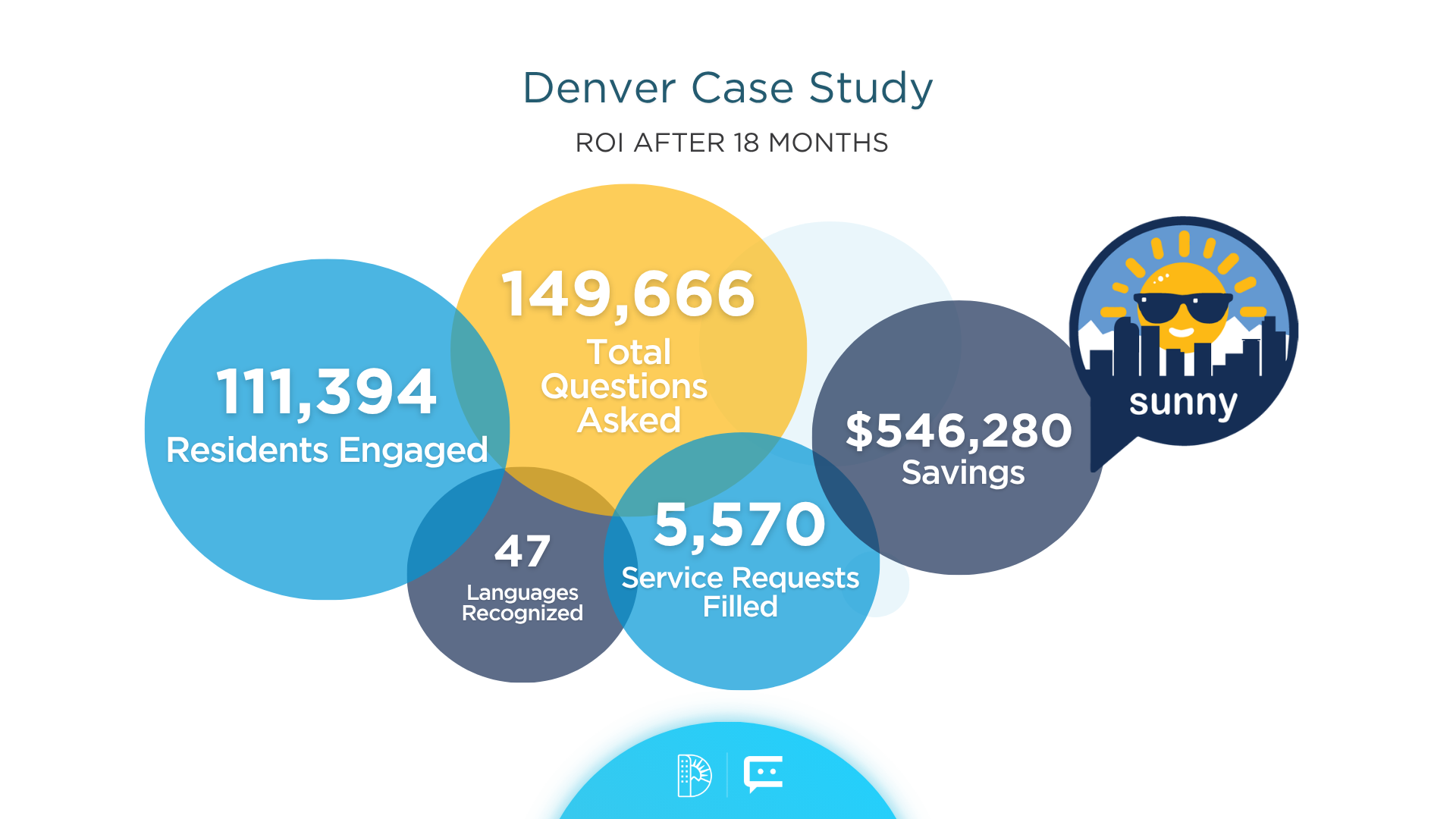
Denver’s results give the story weight. Each chatbot interaction costs about 35 cents versus roughly 4 dollars for a 311 call, and Sunny has already processed more than 95,000 conversations while maintaining an approval rating of about 85 percent. In a budget-constrained environment, that is not just efficiency. That is operating leverage.
Laura also offered one of the most useful warnings in the entire discussion: “We have 150 web authors, so we have 150 voices, but we are excited to use Citibot to develop a true, cohesive Denver voice across every platform.”
The subtext is impossible to miss. Government agencies do not merely have a content problem. They have a governance problem.
What Revere Proves
Revere demonstrates that AI is not only a big-city play. It is a trust and access strategy for smaller governments that need to serve diverse populations without building massive new teams.
Nick Romano framed the purpose of 311 in terms that are far more revealing than they first appear: “Before establishing the 311 office, resident complaints and concerns went straight to the Mayor's Office. Former administrations simply could not keep up with the demand of responding to inquiries and accounting for every reported issue, often getting lost in the metaphorical ‘blackhole’. Now, everything is tracked and accounted for.”
That quote is punchy because it strips away the jargon. Residents do not care whether a government has launched an innovation initiative. They care whether requests disappear into a black hole or produce a visible response. Accountability, in this sense, is not abstract. It is operational.
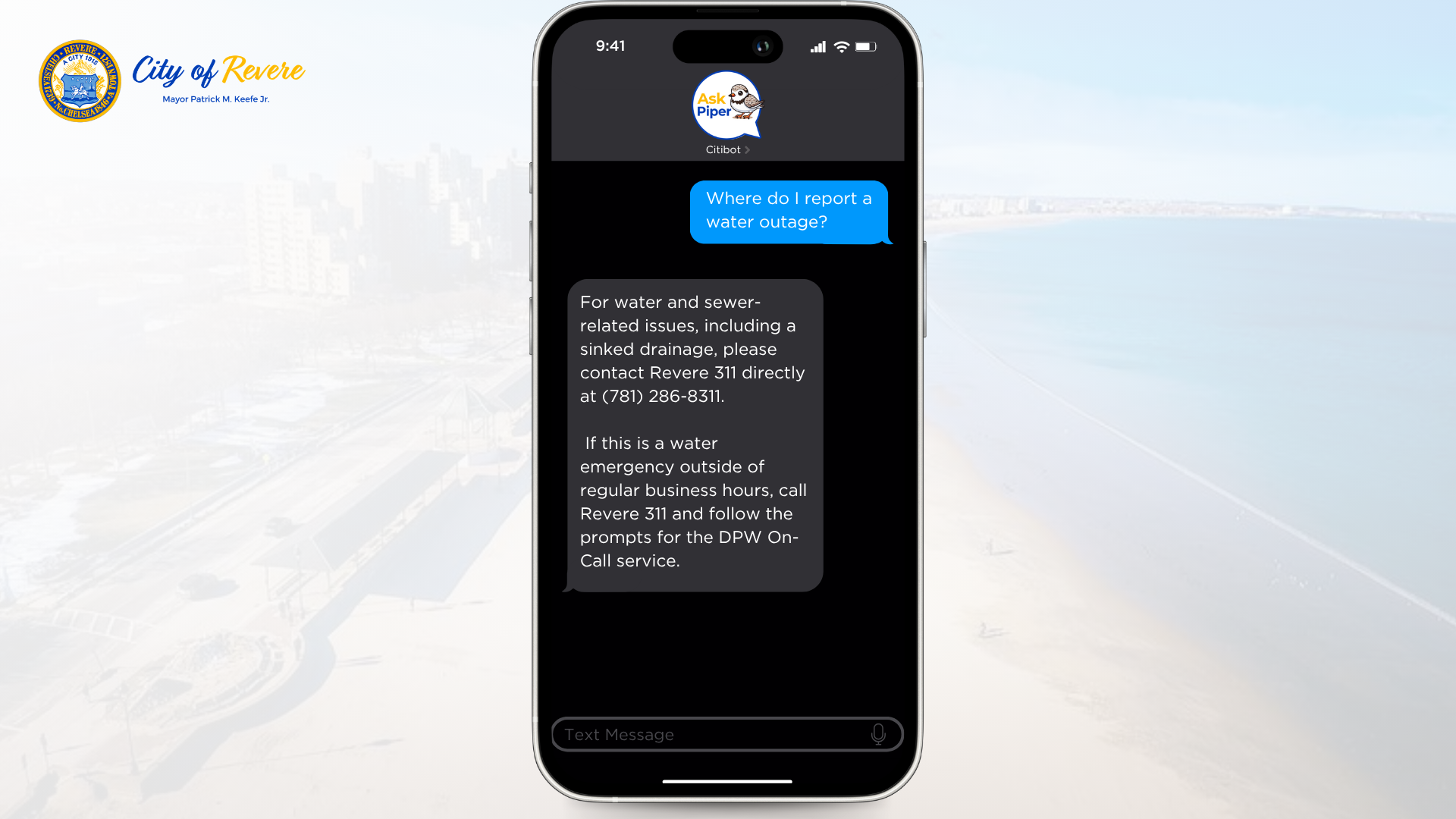
Romano’s second major lesson is about inclusion. “Revere has a very diverse population, with the majority of residents that English isn’t their first language. So with Piper our chatbot, they can text us in over 75 languages.” In one sentence, he connects language access, mobile convenience, and resident trust.
The Lessons That Matter Most
These city stories point to a set of lessons that government leaders can use immediately.
Lesson 1. Clean data comes before clever AI. Denver’s experience showed that archiving stale pages, simplifying language, and removing acronyms are prerequisites for trustworthy automation.
Lesson 2. Cost savings are real, but only when the content layer is strong. Denver’s reported shift from roughly 4 dollars per agent interaction to 35 cents per chatbot interaction is compelling because it was built on disciplined preparation.
Lesson 3. Accessibility is no longer separate from service. The DOJ rule puts digital content, apps, and many documents inside the operational scope of public service delivery.
Lesson 4. Multilingual service is a trust strategy. Revere’s use of text-based support across more than 75 languages shows how AI can widen access without forcing agencies to scale human language coverage at the same pace.
Lesson 5. AI is a listening tool, not just a response tool. The panel highlighted how conversational data can reveal service gaps, hidden language needs, and changing resident behavior.
Lesson 6. Governance beats one-time cleanup. Citibot Refresh is built around continuous scanning and remediation guidance across websites and PDFs, which is what agencies need when content changes every day.
The Operational Case For Refresh
Citibot Refresh fits this moment because it addresses the messiest part of public sector modernization, the part many agencies would rather not talk about. Websites drift. PDFs pile up. Messaging fragments. Accessibility issues hide in plain sight. No one department fully owns the problem, yet every resident feels the consequences.
Refresh is designed to continuously scan websites and PDFs for outdated information, accessibility barriers, inconsistent messaging, and unclear content, then recommend specific fixes. That matters because most government agencies do not need another report. They need a repeatable system that tells them what is broken, why it matters, and what to do next.
The platform also aligns directly with the panel’s most practical insight, which is that AI can only be as good as the material it is allowed to touch.
Bratton Riley summarized that bluntly in the discussion: “If you have data that nobody’s looked at in 10 years, you’re not going to sprinkle Citibot pixie dust on it and it’s going to be fabulous. It won’t. It’s only as good as what you turn it loose on.”
What Leaders Should Do Now
For government leaders, the takeaway is not to admire these examples from a distance. It is to act on them. The agencies that move now will be in a stronger position to meet accessibility deadlines, improve resident trust, and create cleaner conditions for AI adoption.
The most effective next steps are straightforward.
Identify the highest-traffic pages and highest-risk PDFs first, because not every piece of content carries the same operational or legal weight.
Audit language quality, broken links, and outdated service information before asking AI to scale resident interactions.
Establish one editorial standard for plain language, one governance model for ownership, and one process for remediation across departments.
Focus on the 80 20 rule described in the panel by prioritizing the requests and content areas that represent the largest share of resident demand.
Treat multilingual support and accessibility as part of trust-building, not as side initiatives.
The whitepaper’s central argument is not that AI alone will fix public service. It will not. The argument is that government agencies can no longer separate resident experience from the quality of the digital information they publish. Denver and Revere show what becomes possible when agencies make that connection and operationalize it.
The Real Competitive Standard
Public agencies are not competing in the private-sector sense, but they are competing against frustration, confusion, and declining trust. Every broken link, inaccessible PDF, contradictory instruction, and dead-end service page quietly lowers confidence in government. Every accurate answer, accessible interaction, and clear digital path raises it.
That is what makes this moment so important. The governments that treat website governance as strategic infrastructure will not just be more compliant. They will be easier to navigate, easier to trust, and better prepared for the next generation of resident service. Citibot Refresh belongs in that conversation because it is designed not for abstract AI theater, but for the daily work of making government information more accurate, more accessible, and more useful to the people who rely on it.