How Government Agencies Can Move Beyond the PDF and Improve Resident Trust
Author: Jonathan Wiersma
Jonathan Wiersma is a GovTech product leader focused on improving communication and digital experiences in local government. His work centers on helping agencies deliver clear, accessible, and user-friendly information across websites and digital services. He is particularly interested in how better content and communication practices can improve service delivery and build trust with residents.
Key Summary
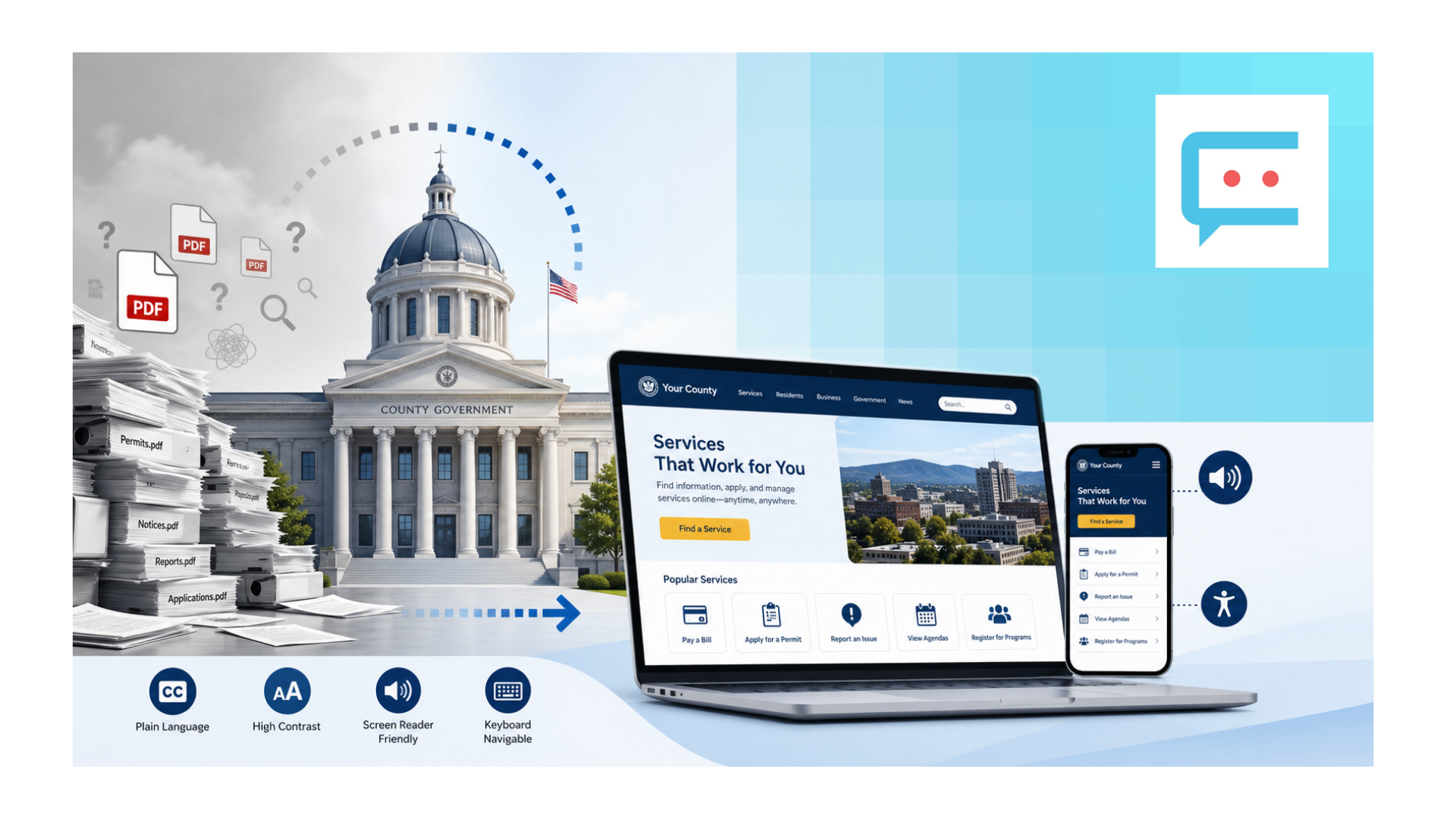
Government agencies are under growing pressure to make digital information easier to find, easier to understand, and easier to use. In the webinar that informs this paper, Citibot and Rebecca Woodbury make the case that a PDF-heavy publishing model no longer serves residents, staff, search engines, or AI systems well, particularly when critical information is locked inside static files that are hard to search, difficult to read on mobile devices, and often inaccessible by design. The urgency is clear. The CDC reports that more than 1 in 4 adults in the United States live with a disability, which makes accessibility a central public service issue rather than a niche requirement.
This paper argues that government agencies can improve resident trust by treating the website as a living service environment instead of a document archive. Citibot Refresh supports that shift as an AI-powered website governance platform built for the government that continuously scans pages to identify errors, stale information, inaccessible content, and inconsistent messaging, then recommends specific fixes so teams can improve accuracy, compliance, and trust without months of manual review.
Key Conclusions
The PDF has become a weak default format for most resident-facing information because it often reduces accessibility, searchability, and usability across devices.
A web-first content strategy is now a resident experience strategy as well as a governance strategy because structured pages are easier to update, easier to navigate, and easier for AI systems to interpret.
Accessibility works best when it is built into the publishing process from the start instead of treated as a cleanup task after content goes live.
Content health and content compliance should be managed together because inaccurate, outdated, and confusing information often creates the same trust problems as inaccessible information.
Key Quote
"Digital strategy should focus on having fewer PDFs. By shifting from static documents to service pages, municipalities ensure public information is discovered and used rather than just stored." — Rebecca Woodbury
For many government agencies, the website still behaves like a filing cabinet rather than a service channel. Important information is often posted as downloadable documents because that has long been the default publishing habit. But the webinar source behind this paper makes clear that PDFs create avoidable friction. They are hard to use on mobile devices, difficult to search internally and externally, slower to load, and often disconnected from the actions residents are actually trying to complete.
That friction matters because a website now functions as the public-facing front desk of government. If a resident is trying to pay a bill, apply for a permit, understand a fee schedule, or find an emergency update, the information should guide action rather than force the resident into a static attachment. When the experience feels confusing or outdated, trust declines even if the information technically exists.
Why Accessibility Changes the Standard
Citibot’s mission is to build trust between governments and residents through accessible, AI-powered communication, and that mission raises the standard for how public information should perform online. Information must be usable in the way residents actually consume it, which is why accessibility can no longer be treated as a narrow compliance issue.
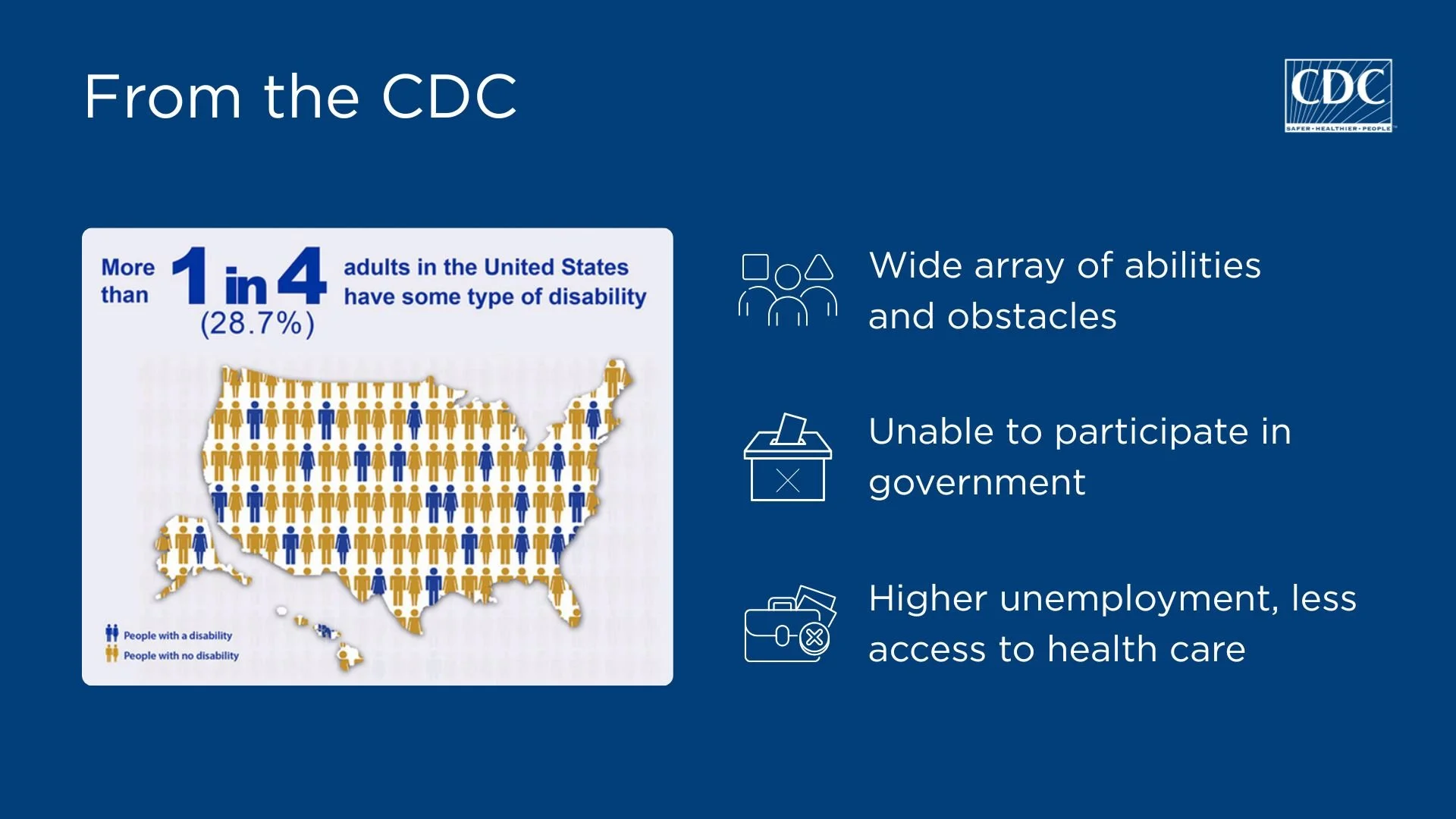
The CDC’s finding that more than 1 in 4 U.S. adults live with a disability puts the scale of the issue into focus. In the webinar, Bratton Riley uses that fact to emphasize that accessible content is about serving a large share of the public, not a marginal audience. Legacy PDFs frequently fail that test because many contain poor heading structure, inaccessible tables, scanned text, or layouts that do not translate well to assistive technology or small screens.
There is also a practical AI implication. Poorly structured PDFs are harder for AI tools to interpret accurately, which makes them a weaker foundation for search, chat, and digital service delivery. In the AI age, inaccessible content is not only a compliance risk. It is an operational limitation.
From Documents to Service Pages
A stronger model starts by asking what the resident is trying to do. Rebecca Woodbury’s guidance in the webinar is especially useful here because it shifts the conversation from format to function. If the content is about getting a permit, paying a bill, or completing another public task, it should usually be presented as an action-oriented webpage rather than a document.
The source material describes a practical action page structure that includes an overview, what residents need to know, what to do before starting, the steps involved, what happens next, and where to get help. This structure improves usability because it reflects how residents actually move through a task. It also makes content easier to scan, easier to update, and easier to trust.
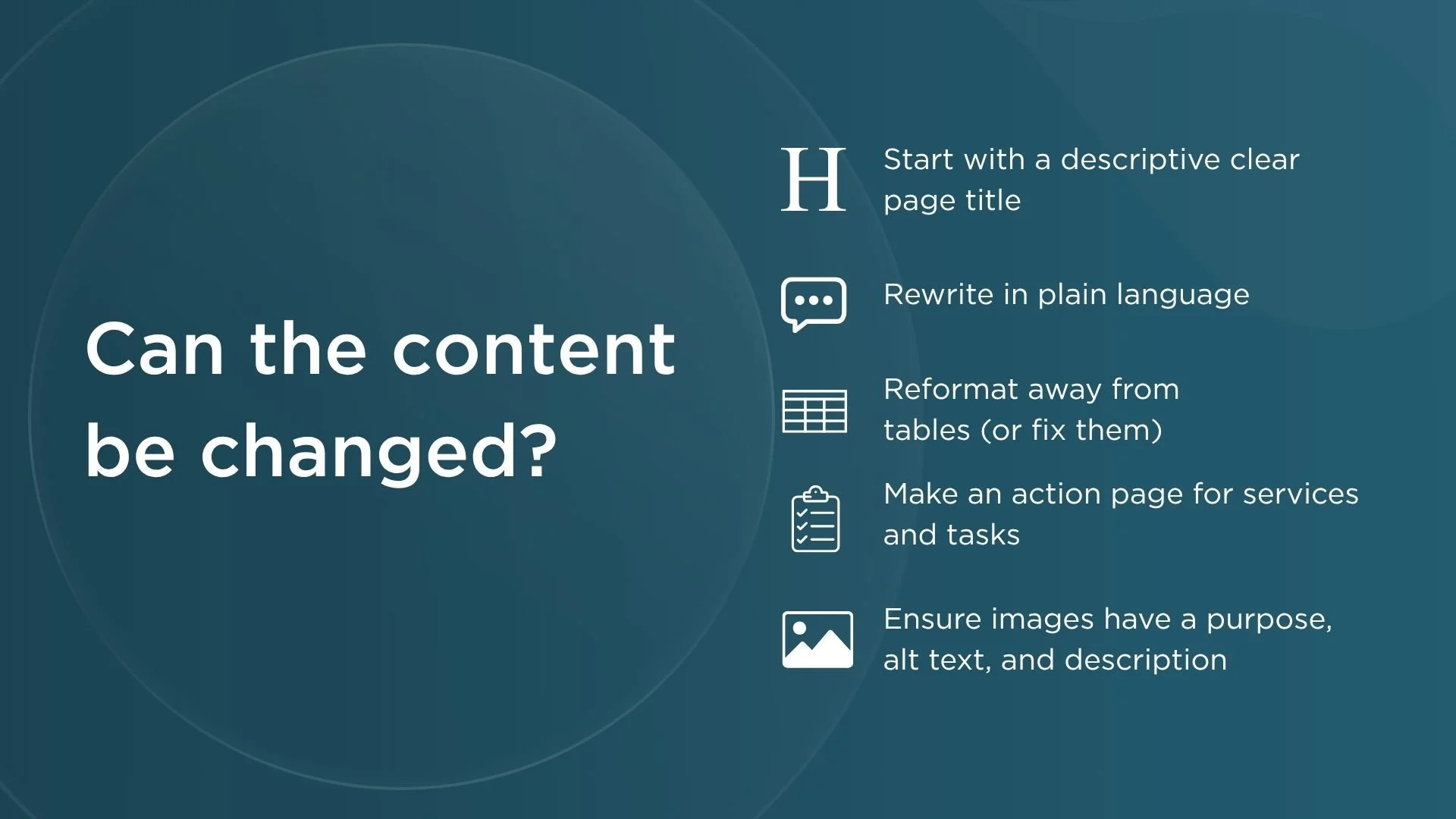
Plain language is another core part of the shift. The webinar recommends public-facing content written roughly at a grade 5 to 8 reading level, along with clear page titles, sequential headings, accessible tables, and meaningful alt text for images. These choices do more than support compliance. They reduce confusion and improve the overall resident experience.
Why Governance Matters Now
The content health and content compliance is one of the most useful ideas in the source material because it links accessibility to a broader discipline of website governance. Inaccurate pages, stale instructions, unexplained acronyms, and inconsistent messaging all weaken trust, even before a formal accessibility review begins.
Citibot Refresh is positioned to address that broader problem. In the webinar context, it is presented as an AI-powered website governance platform that continuously scans pages and documents to flag accuracy issues, accessibility risks, outdated content, and inconsistent voice, then recommends specific fixes teams can review and act on. For leaders in government agencies, that means website management can move from occasional audits to an ongoing governance practice.
The same logic applies to overlays. The webinar warns against treating overlays as a real solution, and outside accessibility guidance echoes that concern by noting that overlays do not fix many underlying WCAG issues in source code. Government agencies build more trust when they improve the content itself rather than adding a visible patch over deeper problems.
A Better Standard for Resident Experience
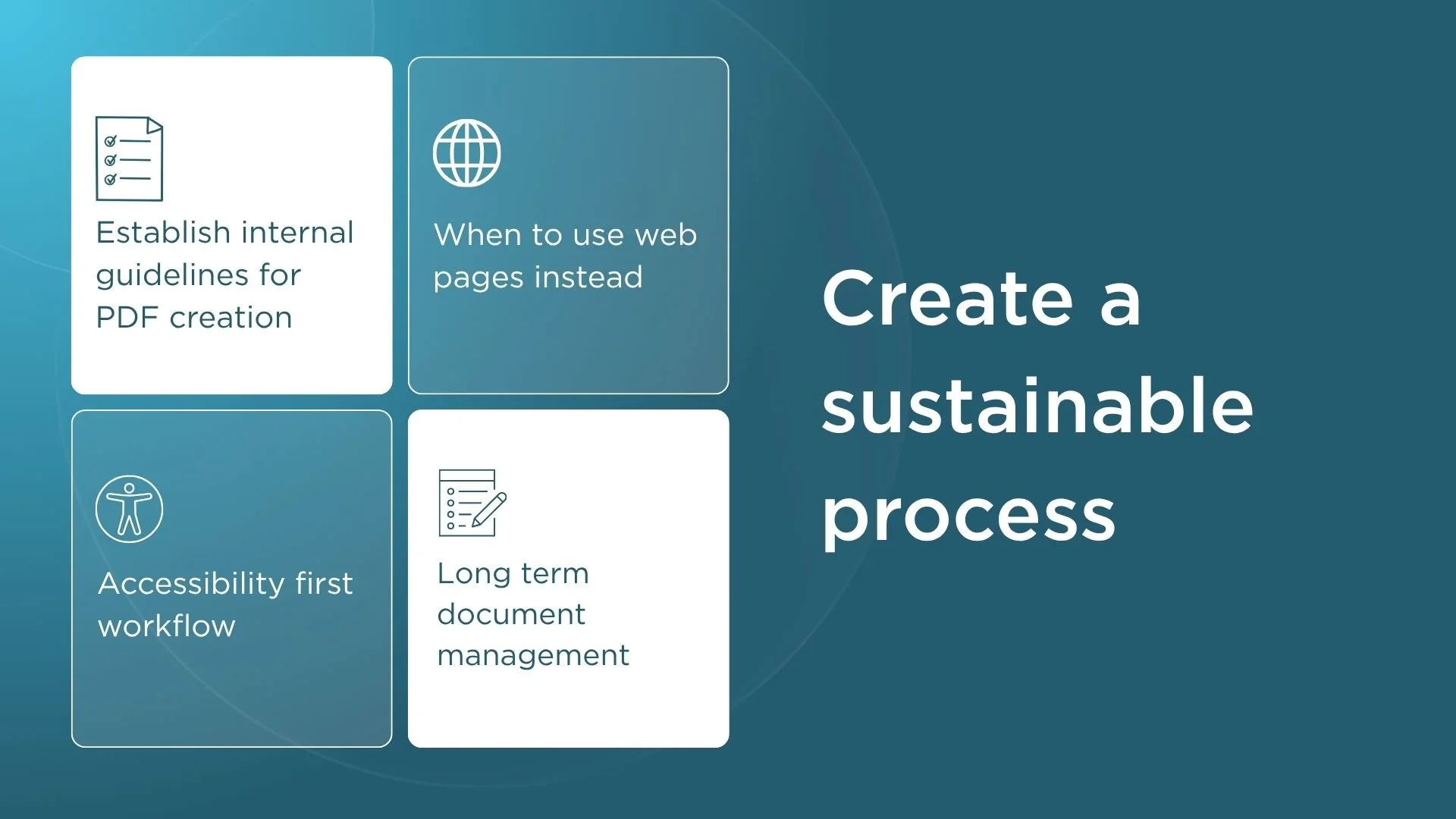
The practical first step is not to eliminate every PDF overnight. It is to inventory what exists, identify which documents are actively used, and decide what should become a webpage, what should remain downloadable, and what should be archived. Agencies move faster when they also create internal guidance for when staff should publish a page instead of a document and how accessibility is built into the workflow from the beginning.
That is the deeper argument of this paper. Moving beyond the PDF is not only about format. It is about whether government agencies want digital service to feel modern, clear, and trustworthy. In that sense, web-first publishing is not simply a communications upgrade. It is a visible expression of how seriously an agency takes resident trust.